Service

Skin tag, mole and wart removal

Small lesions, properly assessed — then quickly, neatly removed.

Most “small bumps” people want removed are benign — skin tags around the neck and underarms, seborrhoeic keratoses on the back, viral warts on the hands or feet, the occasional raised mole that catches on a necklace. They’re cosmetic concerns more than medical ones, and they’re among the quickest, most satisfying things we treat in clinic.

But not every bump is what it looks like at a glance. A mole that has changed shape, colour or size deserves dermoscopy and sometimes a biopsy before anything is removed. We assess every lesion before we treat it — once a lesion is removed, the diagnostic information goes with it.

For the benign ones, the in-clinic options are simple: radiofrequency cautery for most skin tags, cryotherapy with liquid nitrogen for many warts and keratoses, electrocautery or a fine scalpel where the lesion needs a more controlled hand. Healing is usually 7–10 days. Sun protection over the treated spot matters for the next 8 weeks.

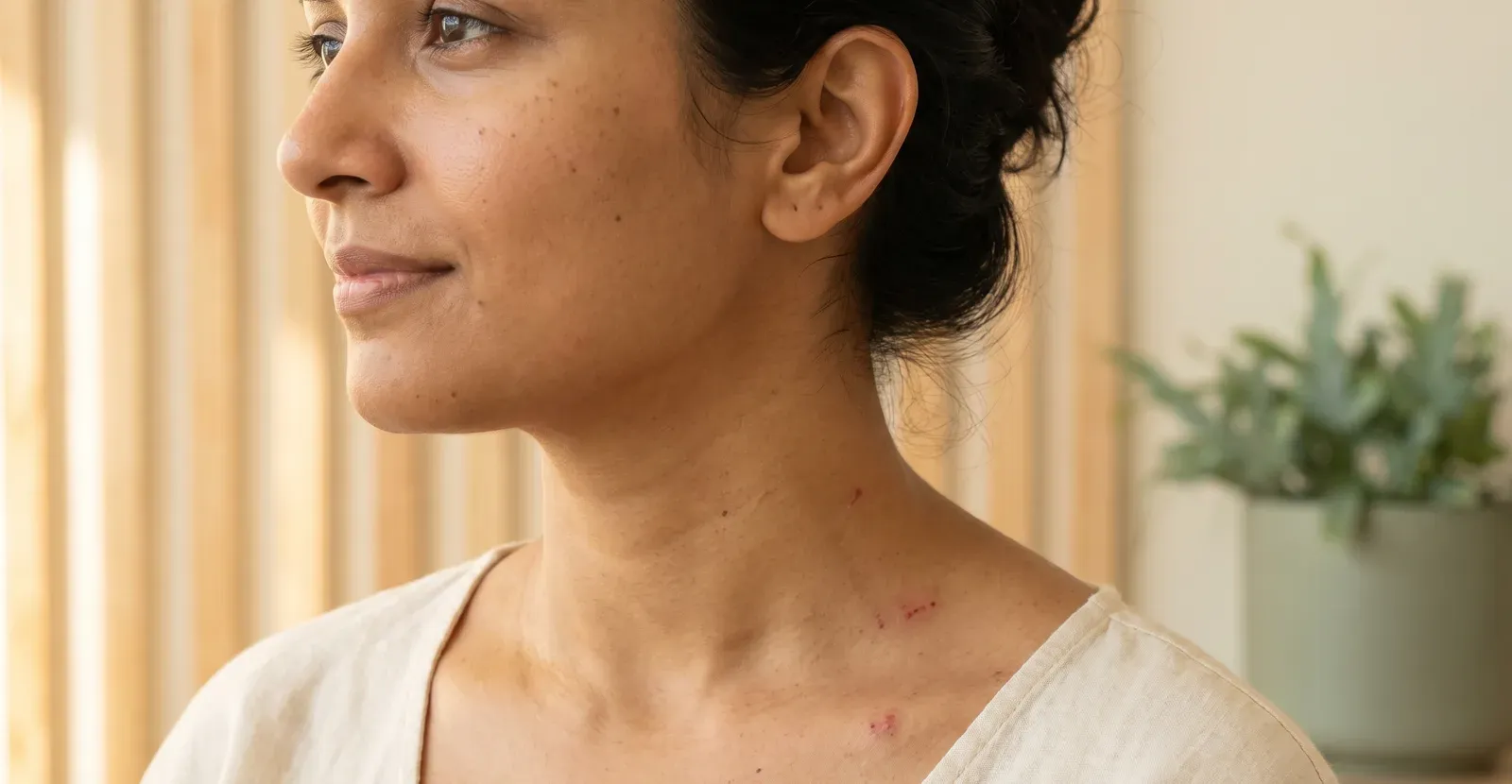
Soft close-up of an Indian woman’s neck and shoulder with calm natural skin, warm natural light, wellness portrait.

We treat:

  • Skin tags (acrochordons) around the neck, underarms, eyelids and groin
  • Seborrhoeic keratoses — “age spots” or rough wart-like growths, often on the back and temples
  • Viral warts (verruca) on the hands, fingers and feet
  • Plantar warts on the soles
  • Filiform warts around the eyes, nose and lips
  • Raised moles that catch on jewelry, clothing or shaving — after assessment
  • Molluscum contagiosum in children and adults

How we approach skin lesions

1. Assess before we treat

Every lesion is examined with dermoscopy where useful — most are obviously benign, a few are not. Anything that looks atypical is photographed, measured and, where appropriate, biopsied before being removed. We don’t remove a lesion blind.

2. Right tool for the lesion

Radiofrequency cautery for most skin tags and small filiform warts. Cryotherapy (liquid nitrogen) for many viral warts and seborrhoeic keratoses. Electrocautery or fine-scalpel for moles needing a more controlled removal. We don’t use one technique for everything.

3. Quick, in-clinic, under local

Local anaesthetic where useful (none needed for small skin tags). Most sessions are 15–30 minutes and treat multiple lesions in one visit. Aftercare is a simple antiseptic and a small dressing.

4. Sun protection for 8 weeks afterwards

The treated spot is more prone to post-inflammatory pigmentation for about 8 weeks. Daily sunscreen over the area is the single most important step in keeping the result looking like nothing happened.

What to expect

Session day

15–30 minutes in clinic. Local anaesthetic where useful; small skin tags often need none.

Days 1–7

Small scab forms over the treated spot. Mild tenderness for 24–48 hours.

Days 7–10

Scab falls off on its own — do not pick. Pink skin underneath gradually evens out.

Weeks 2–8

Strict sun protection over the area. Final colour match settles by 8 weeks.

Indicative pricing

Skin lesion consultation (15 min, with dermoscopy) ₹1,000
Skin tag removal (per lesion) ₹500 – ₹1,500
Wart removal — cryotherapy or RF (per lesion) ₹800 – ₹2,000
Mole removal (per lesion, after assessment) ₹2,000 – ₹5,000
Multiple lesions package (per session) Quoted at consult
Biopsy (when needed, with histopathology) ₹3,000 – ₹6,000

Most sessions treat multiple small lesions together — quoted as a package at consult rather than per lesion. Histopathology, when needed, is billed at the lab directly.

Frequently asked questions

Will it hurt?

Small skin tags often need no anaesthetic — the procedure is quicker than the anaesthetic itself. For larger lesions, moles and warts, we use local anaesthetic; you feel pressure but no sharp pain.

Will it leave a scar?

Most small skin tag removals heal without a visible mark. Larger lesions and mole removals leave a fine flat scar that softens over months. We choose technique and technique-depth specifically to minimise scarring on Indian skin.

Will it grow back?

Skin tags that are properly removed do not regrow in the same spot — but new ones can appear elsewhere, especially in areas of friction or in PCOS. Viral warts can recur and sometimes need a repeat session, since the underlying virus persists in the skin.

Is it safe to do this while pregnant?

Yes — simple skin tag and wart removal under local anaesthetic is safe in pregnancy. We avoid cryotherapy over the abdomen and discuss timing of cosmetic mole removal honestly. Many patients prefer to wait until after delivery for non-essential removals.

How do I know if a mole needs a biopsy?

Any mole that has changed in shape, colour or size, or is irregular, multi-coloured, or larger than 6 mm deserves dermoscopy and often a biopsy before removal. We assess every mole at consult and tell you honestly whether a biopsy is needed.

Can I get multiple lesions removed in one visit?

Yes — most patients do exactly that. We commonly treat 5–15 small skin tags and seborrhoeic keratoses in a single session, with a flat package price rather than per-lesion billing.

Related reading from the SkinWise blog

Ready to start with a consult?

Most plans at SkinWise begin with a focused 15-minute consultation. We map the concern, talk through what you’ve tried, and only then suggest what comes next — no oversell.

Book consultation