Assess skin and hair
Discuss hair colour and thickness, treatment area, skin tone and tanning. Ask which device and wavelength are proposed and why they fit your situation.
Updated
Plan for hair reduction around your skin, hair and treatment area.
Laser hair reduction targets pigment in hair follicles to reduce growth over time. Results vary with the body area, hair colour, skin tone, device and hormonal context. Repeat or maintenance treatment may be needed. At SkinWise, suitability and the proposed equipment are discussed before a treatment plan is agreed.
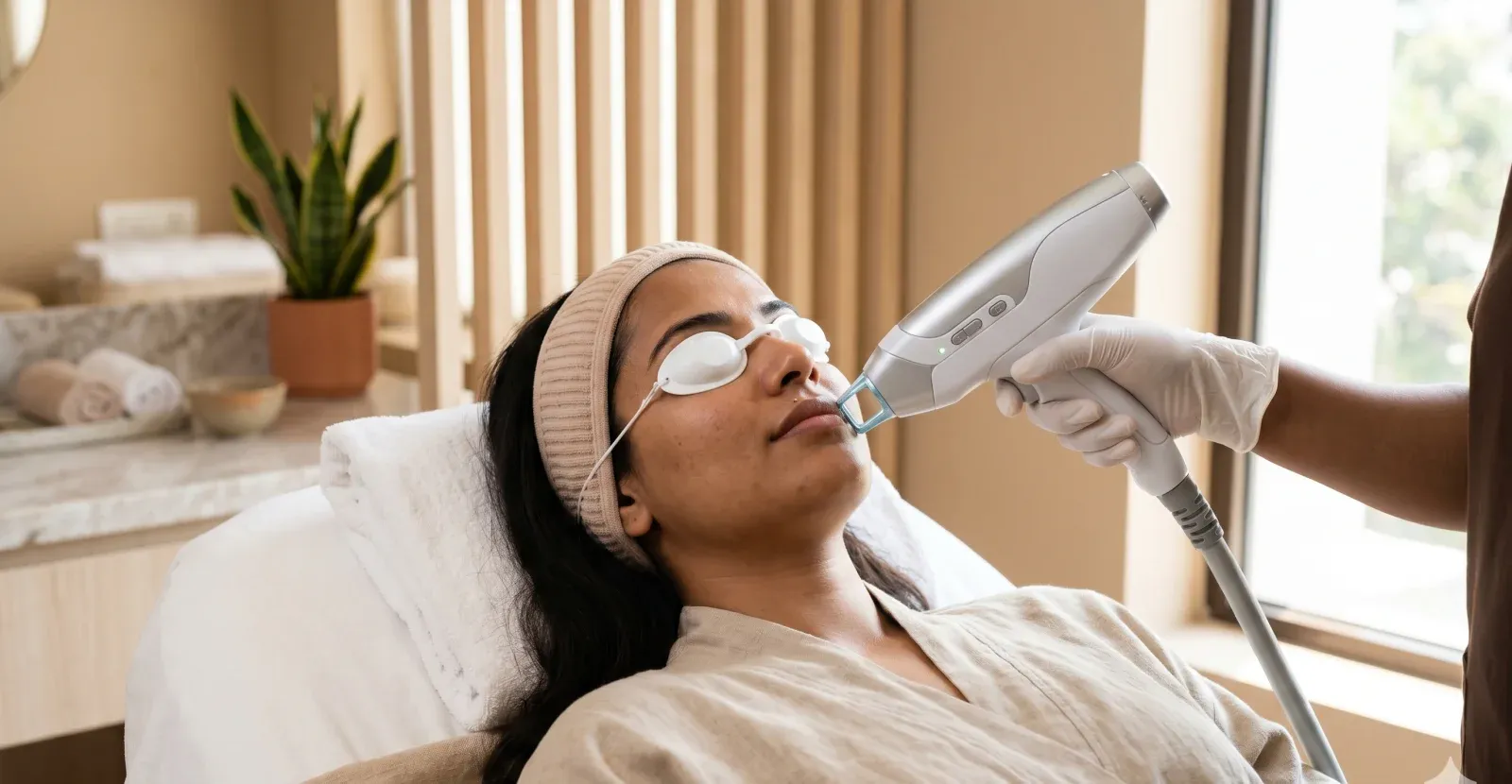
Coarse pigmented hair and fine light hair do not respond in the same way. A recent tan, previous burns or pigment changes and the treatment site can also affect the choice. Indian patients have a range of skin tones; nationality alone cannot determine settings or suitability.
For increasing facial hair, the consultation may also consider hormonal symptoms. Hair reduction treats the hair; it does not diagnose or cure PCOS.
Discuss hair colour and thickness, treatment area, skin tone and tanning. Ask which device and wavelength are proposed and why they fit your situation.
New, rapidly increasing hair or accompanying menstrual changes may warrant further assessment. Treating an underlying concern and reducing hair are separate parts of care.
Ask about cooling, eye protection, test spots where appropriate and preparation instructions. Burns, pigment changes, scarring and paradoxical increased hair growth are possible.
Spacing and repeat treatment depend on the site, growth cycle and response. Research does not support promising everyone the same reduction percentage or number of sessions.
Share all medicines and previous reactions. Ask when to shave and whether to avoid waxing, plucking or tanning before the proposed session.
Redness or swelling can occur. Follow the individual aftercare instructions and contact the clinic for blistering, increasing pain or other unexpected changes.
Hair may become less dense or require less frequent removal, but regrowth and maintenance are possible. Hormonal facial hair can need a different course from body hair.
No such result can be guaranteed. Long-term reduction is the aim, with variation by site, hair characteristics and hormonal context.
The wavelength is only part of the decision. Skin and hair colour, device design, cooling, settings and provider experience matter. Ask which equipment is actually proposed; this page does not specify the clinic’s device inventory.
Paradoxical increased hair growth is a recognised risk. Discuss it before treating facial or neck hair, particularly when the hair is fine or the expected benefit is uncertain.
No. Laser can help selected facial hair concerns in PCOS, but more treatment or maintenance may be needed. Hormonal care should be considered separately when indicated.
Only five trials met the long-term review criteria. Outcomes varied with treatment and body site, so a fixed reduction percentage or permanent hair-free result cannot be promised.
Guidance for premenopausal women connects hair reduction with appropriate hormonal assessment. Wavelength, cooling and the risk of increased hair growth need discussion for relevant skin and hair types.
PCOS care addresses reproductive, metabolic and psychological health as well as skin symptoms. Laser may help facial hirsutism, but response and maintenance vary; hair symptoms alone do not diagnose PCOS.
Area-specific notes on what we see and how we treat for patients from each part of the south-east Bengaluru corridor:
Most plans at SkinWise begin with a focused consultation. We map the concern, talk through what you’ve tried, and only then suggest what comes next — no oversell.
Plan your first visit: appointments, clinic location and what to bring.