Published · Updated · SkinWise Clinic
Diode vs Nd:YAG for hair reduction: questions beyond the wavelength
Choosing between diode and Nd:YAG for hair reduction needs more than a wavelength comparison. The proposed device, settings, cooling, treatment area and provider’s experience matter alongside skin and hair characteristics.
What a wavelength can and cannot tell you
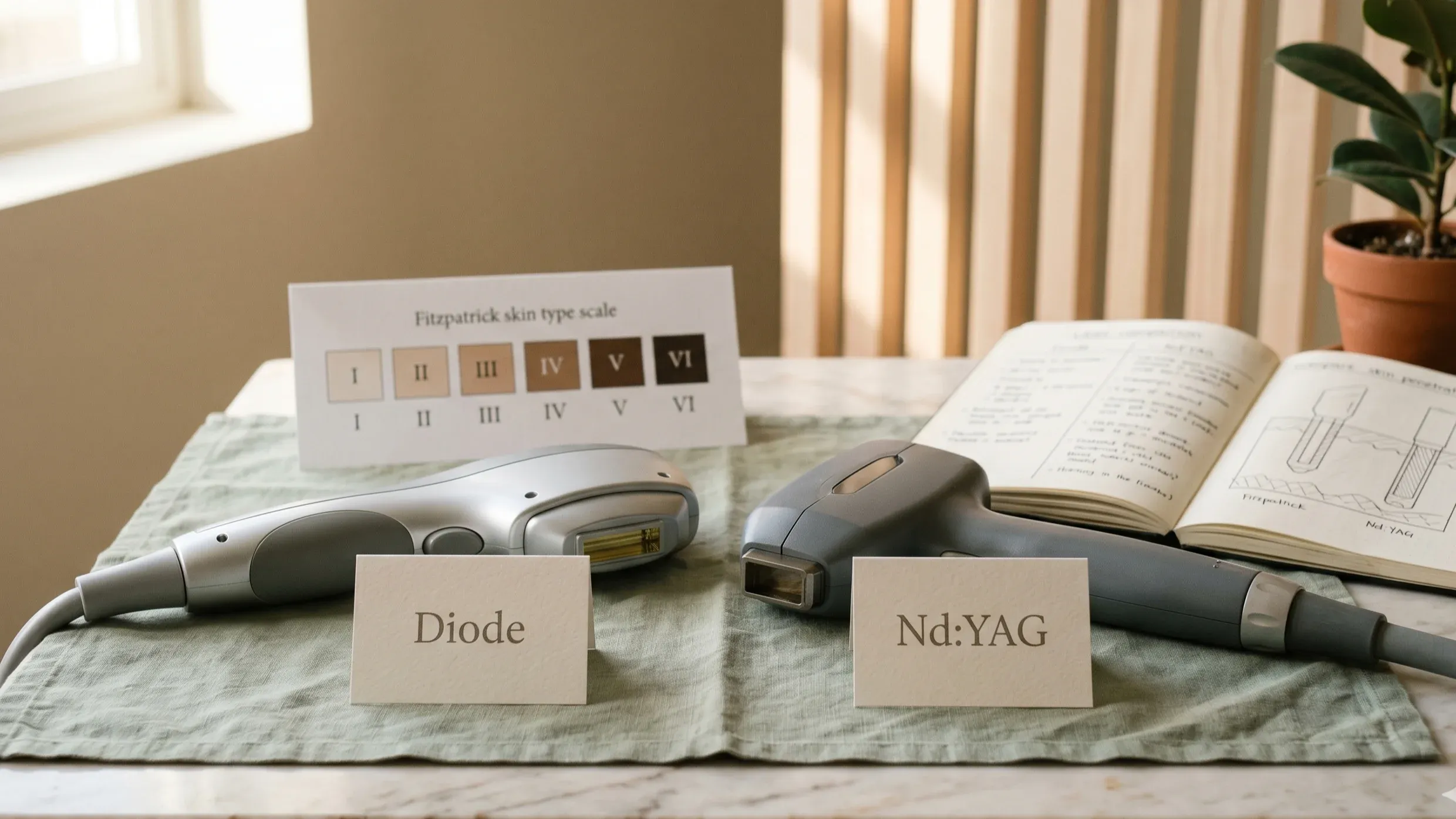
The Endocrine Society guideline suggests a long-wavelength, long-pulse-duration source such as Nd:YAG or diode with appropriate cooling for women of colour undergoing photoepilation. This is guidance for a defined population and procedure. It does not identify a universal winner or establish that every machine carrying one of those names performs equally.
Do not equate “Indian skin” with one skin type. Recent tanning and earlier burns or pigmentation reactions should be considered even if previous laser treatment went well.
Compare the actual proposed treatment
| Ask about | Why it matters |
|---|---|
| Device and wavelength | “Laser” or “diode” alone is not a full specification. |
| Skin and hair assessment | Colour, thickness, site and recent tanning influence suitability. |
| Cooling and eye protection | These are part of the safety discussion. |
| Expected reduction and follow-up | Body sites and hormonal hair growth respond differently. |
| Risks and alternatives | Fine facial hair, light hair or an unsuitable skin condition may change the choice. |
The long-term hair-reduction review found a small and varied trial base. It does not justify promises of a standard percentage reduction or a fixed course for everyone.
Facial hair deserves a separate discussion
For fine facial or neck hair, ask whether the expected benefit justifies the risk of paradoxical increased growth. New or rapidly increasing coarse hair with other symptoms may warrant hormonal assessment. For PCOS, international guidance separates hair reduction from wider medical care and recognises possible maintenance needs.
What SkinWise will confirm at consultation
Ask which equipment is proposed for your treatment, why it is suitable, whether a test spot is useful and what preparation and recovery instructions apply. This article explains general selection principles; it does not claim the clinic uses every device discussed.
Read the laser hair reduction service guide for planning and the hirsutism overview if the concern includes increasing facial or body hair.