
Sebaceous cyst
Updated · SkinWise Clinic
Many lumps called sebaceous cysts are epidermoid cysts, which contain keratin. Other lumps can resemble them, so examination matters. A confirmed quiet cyst may be observed; pain, inflammation, growth or uncertainty can change the treatment decision.
A lump beneath the skin should not be diagnosed solely from an online description. Note when it appeared, whether it has changed and whether it has drained.
Squeezing or puncturing it at home can cause injury or infection and does not reliably address a cyst wall.
How sebaceous cysts present
- A lump beneath the skin
- A central opening in some epidermoid cysts
- Tenderness or redness if inflamed
- Possible discharge
What causes them
- Formation of an epidermoid cyst lining in the skin
- Rupture can cause inflammation
- Other diagnoses can resemble a cyst
When to see a dermatologist
Seek assessment for a new, enlarging, painful or uncertain lump. Spreading redness, fever or significant worsening needs prompt care.
How sebaceous cyst is treated at SkinWise
Management follows diagnosis and symptoms. Observation, drainage of a selected inflamed lesion or planned excision may be discussed. Excision creates a scar, and recurrence is possible; procedure timing and aftercare depend on the clinical situation.
Services that treat sebaceous cyst
Evidence behind these choices
- Overview of epidermoid cysts (2019)
Explains diagnosis and treatment of epidermoid cysts, often called sebaceous cysts. Similar lumps can have other diagnoses; treatment depends on symptoms and examination.
Read more
Frequently asked questions
Does every cyst need removal?
No. A confirmed asymptomatic cyst may be observed after assessment.
Can drainage prevent every recurrence?
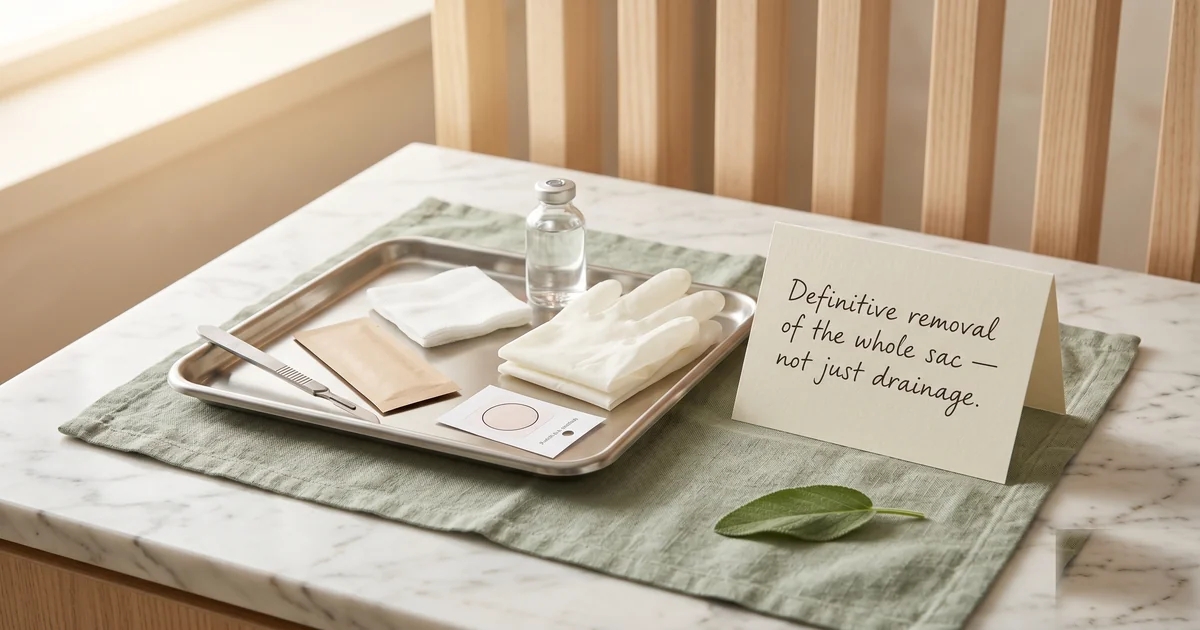
No. Drainage may leave the cyst lining behind. The clinician can explain whether later excision is useful.
Will surgery be scar-free?
No. The expected scar and risks depend on location, size, technique and healing.
Ready to start with a consult?
A focused first consultation is where we slow down, map your concern and build the smallest plan that will actually move the needle. No oversell, no fixed menu.