
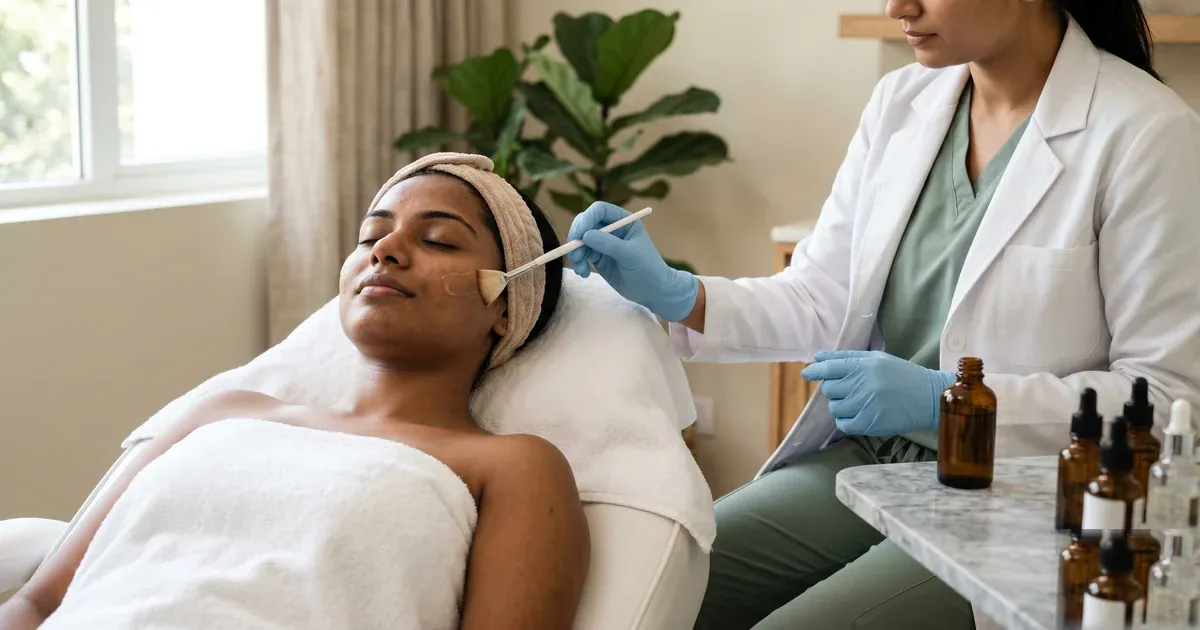
Chemical peels — glycolic, mandelic, salicylic and TCA for Indian skin at SkinWise Clinic, Bengaluru.

By · Dermatologist, SkinWise Clinic Published Last reviewed

Chemical peels for Indian skin: the honest guide

The phrase “chemical peel” still triggers anxiety in most patients who haven’t had one. They picture sheets of skin coming off, weeks indoors, and a face that looks worse before it looks better. Most of what they’re picturing is a Hollywood medium-depth peel from the 1990s — not the careful, calibrated peels we use today on Indian skin.

A modern dermatology peel, done right, is a small, low-drama procedure with a meaningful cumulative effect over a course. The hard part isn’t the peel — it’s choosing the right acid, at the right strength, for the right Indian skin, and protecting the result afterwards.

Here’s how peels actually work, which one suits which concern, and what to watch out for.

What a peel actually is

A chemical peel is a controlled application of an acid (or acid blend) to the skin that accelerates the rate at which the upper layers turn over. The lower-energy peels we do most commonly — glycolic, mandelic, salicylic, lactic — work on the epidermis, lifting dull, pigmented, congested skin and signalling fresher, more even-toned skin to come up underneath. Medium-depth peels (TCA, Jessner’s) reach into the upper dermis for tougher concerns like deeper pigmentation or fine scarring.

The myth that peels “strip” skin gives the wrong mental picture. They speed up a process the skin is already doing. The dermatologist’s job is to make sure that process happens evenly and without inflammation, because in Indian skin, uncontrolled inflammation is exactly what causes pigmentation.

What peels are good for

In our practice in Bengaluru, peels are best at:

  • Post-inflammatory hyperpigmentation (the marks left by acne, ingrowns, eczema, friction)
  • Acne — especially comedonal and oily-skin acne; salicylic-based peels are an excellent adjunct
  • Melasma — used carefully as part of a layered plan (never as the only treatment)
  • Dull, congested, sun-damaged skin — particularly after a busy travel/commute season
  • Mild to moderate texture irregularity — rough skin, early fine lines
  • Body areas — back acne, dark underarms (carefully), elbows, knees

What peels are not good for:

  • Deep acne scars (microneedling-RF and lasers, not peels)
  • Deep wrinkles or sagging
  • Active acne flares — we calm the active acne first, then peel
  • Compromised barrier skin — over-exfoliated, raw, or eczema-prone

The peels we use, and what each one is best at

Glycolic acid (alpha-hydroxy)

Smallest molecule of the AHAs — penetrates fast, works hard. Good for dull, sun-damaged, mildly pigmented skin and acne marks in patients with reasonably resilient barriers. Less ideal as a first peel for very sensitive or melasma-dominant skin.

Concentrations from 20–70% in clinic, neutralised after a specific contact time.

Mandelic acid

Larger molecule, penetrates more slowly, gentler on the barrier. Our preferred entry-level peel for Indian skin with sensitivity, melasma, or unstable barriers. Antibacterial properties make it useful in acne. The peel we reach for first when we don’t know how a patient’s skin will respond.

Salicylic acid (beta-hydroxy)

Lipid-soluble — gets into oily, plugged pores. Best for comedonal acne, oily skin, blackheads, back acne, and folliculitis. Excellent for the T-zone in adolescents and young adults.

Lactic acid

Gentle, hydrating, mildly brightening. Used in patients with very sensitive or dry skin where the goal is glow rather than aggressive correction.

TCA (trichloroacetic acid)

Medium-depth peel for deeper pigmentation, photo-ageing, and selected scar work. We use it carefully in darker Indian skin tones — wrong concentration or technique can drive pigmentation rather than clear it.

Jessner’s solution

A combination peel (salicylic + lactic + resorcinol) used in moderate acne, photoageing and combined concerns. Good intermediate option between superficial AHAs and TCA.

Specialty peels

Phytic acid, retinol peels, and combination medical blends — used in selected patients, often as part of a layered melasma or acne-scar plan.

For a deeper dive on choosing between two of the most common options, see our glycolic vs mandelic peel guide.

How we sequence a peel course

A peel is not a one-and-done event. Real results come from a planned course, properly spaced, with proper preparation between sessions.

Phase 1: prep (2–4 weeks before)

Most Indian skin benefits from priming before the first peel:

  • Daily sunscreen (this is non-negotiable; an unprotected post-peel face will pigment faster than it clears)
  • Gentle ceramide-rich moisturiser to stabilise the barrier
  • Sometimes a low-strength topical retinoid or a depigmenting topical to prime, depending on the indication
  • Stopping aggressive at-home actives — no DIY AHA + retinol + scrub a few days before the appointment

Phase 2: the peel session

A typical peel takes 15–25 minutes start to finish:

  1. Skin examination, photographs
  2. Cleansing and degreasing
  3. Acid applied in controlled passes, monitored for the specific endpoint (we’re not watching the clock — we’re watching the skin)
  4. Neutraliser applied where appropriate
  5. Soothing mask, generous sunscreen application
  6. Detailed aftercare instructions

Sensation ranges from mild tingling (mandelic, lactic) to a brief sting and warmth (glycolic 50%, TCA). Tolerable, brief.

Phase 3: post-peel days 0–7

What’s normal:

  • Mild redness for a few hours to a day
  • A subtle tight, taut feeling
  • Light flaking on day 3–5 for AHAs; more visible peeling for medium-depth peels
  • Slight darkening in pigmented areas right before they lift

What we do at home:

  • Generous moisturiser, gentle cleanser, no actives, no scrubs
  • Strict SPF 50 sunscreen every 2–3 hours when outdoors
  • Hands off — picking flakes is the single fastest way to leave new pigment marks
  • Notify the clinic if anything feels unusually painful, swollen or weepy (rare)

Phase 4: the course

For most concerns, the right plan is 4–6 sessions, 2–4 weeks apart, depending on the peel and the indication. Real change usually shows by sessions 3–4; full course is what consolidates it.

Phase 5: maintenance

Once we’ve achieved the target, light maintenance every 6–8 weeks holds the result. Acne-prone and melasma-prone skin benefits more from ongoing maintenance than from finishing a course and walking away.

Indian skin: what to watch for

The defining concern in peels on darker skin is post-inflammatory hyperpigmentation (PIH) — the new pigment marks that appear after an inflammatory event. Aggressive peeling on inflamed or insufficiently primed skin can deliver worse pigmentation than what you started with.

Things that lower PIH risk:

  • Choosing the right peel for the skin type (mandelic before glycolic, glycolic before TCA, in most cases)
  • Adequate priming
  • Strict daily sunscreen — before, during and after the course
  • Treating any active inflammation first (acne, eczema flare, allergic dermatitis) before peeling
  • A dermatologist watching the skin during application, not a timer

Things that raise PIH risk:

  • Salon-grade or take-home peels without medical oversight
  • Sun exposure in the 2 weeks following
  • Stacking other actives at home during the course (retinol + AHA + vitamin C all together)
  • “Topping up” with another peel before the previous one has fully resolved

What not to do

  • Don’t peel without sunscreen as a non-negotiable. This is the single biggest predictor of whether a peel will help or harm Indian skin.
  • Don’t pick or peel the flakes off. Pulling skin that’s not ready leaves marks for months.
  • Don’t expect a single peel to “fix” melasma or deep acne marks. Peels are part of a layered plan, not a standalone cure.
  • Don’t book a peel a week before a wedding. The right peel timeline before a big event is 4–6 weeks — see our pre-wedding timeline guide.
  • Don’t mix clinic peels with aggressive at-home peels. The home product becomes the variable that derails the medical plan.
  • Don’t do salon glycolic peels. Wrong concentrations, no priming, no neutraliser, no medical oversight. The most common source of peel-related pigmentation we have to fix.

Frequently asked questions

How many sessions will I see results from? For dullness and superficial concerns, often after 1–2 sessions. For acne marks and pigmentation, expect 3–4 sessions before meaningful change. For melasma, the peel is one part of a 6-month plan — not a quick fix.

How soon can I do another peel? Typically 2–4 weeks between AHA peels, 4–6 weeks for medium-depth. Going faster than the skin allows is counter-productive.

Can I do a peel during pregnancy? Some — mandelic, lactic, glycolic in mild concentrations — are usually fine. Salicylic and TCA we pause during pregnancy. We discuss case by case.

Will my skin go dark after a peel? If we’ve chosen and applied the peel correctly, and you’re using sunscreen — no, the trajectory is towards even-toned. Transient mild darkening before flaking is occasional. Persistent post-peel darkening means something in the plan needs adjusting.

Are peels painful? Tingling, mild burn, warmth — yes. Painful in a way you’d describe afterwards as painful — no, for the peels we use routinely.

Can I wear makeup after? Usually from day 2–3 onwards, depending on the peel. Lighter the better in the first week.

Are at-home peel pads safe? For maintenance at low concentrations, generally yes, used carefully. For correction, no — they’re too gentle to do the work but strong enough to derail a clinic plan if overused. Use them as glow maintenance, not as a substitute for an in-clinic course.

Where to go from here

Book a chemical peel consultation — bring photos of the skin concern at its worst and a complete list of your current routine. We’ll match the right peel to your skin and plan the course around your calendar (and any upcoming events).

If you’re still deciding which acid is right for you, glycolic vs mandelic for Indian skin is the natural next read.

Related reading:

Book a consultation with Dr Khushboo

Book consultation