
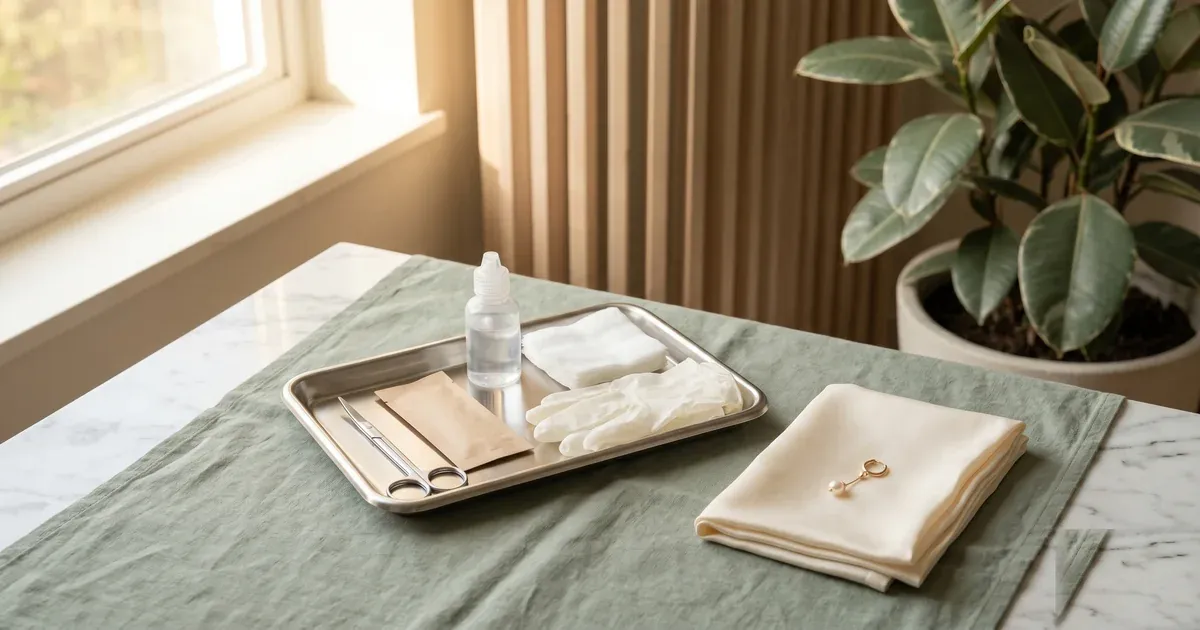
Earlobe repair — torn, stretched and split earlobes repaired at SkinWise Clinic, Bengaluru.

By · Dermatologist, SkinWise Clinic Published Last reviewed

Earlobe repair: a small surgery, a meaningful result

Most patients who come to us for earlobe repair have lived with the tear for years before doing anything about it. The piercing migrated downwards, then split — usually from a heavy earring, sometimes from a child’s sudden tug, occasionally from a hairbrush mishap. The earlobe became one of those things you stopped photographing from that side.

It’s also one of the most satisfying small procedures in our clinic. A 30-minute outpatient surgery under local anaesthetic, a week of stitches, and a properly repaired lobe that can take an earring again 6–8 weeks later. Done correctly, the scar disappears into the natural folds and most people never notice it.

Here’s how earlobe repair actually works, when it’s right for you, and what to expect.

Why earlobes tear in the first place

The earlobe is delicate connective tissue with no cartilage, suspended off the head and pulled on every day by earrings. A few things accelerate failure:

  • Heavy earrings worn daily. Traditional Indian gold jewellery is the most common cause we see — the weight gradually elongates the piercing channel until the lower wall is too thin to hold.
  • Sleeping in earrings, especially studs with sharp backs. Pressure across the night migrates the piercing slowly downwards.
  • A sudden trauma. A toddler reaching for an earring; an earring caught in a dupatta or hair; a sport accident; a phone strap catching a hoop. The piercing tears in seconds.
  • Piercings placed too low. Some piercings are set close to the lower edge of the lobe to begin with, which leaves little tissue between the channel and the edge.
  • Multiple piercings stacked too close. Each adjacent channel weakens the wall between them.
  • Stretched lobes from gauges or large hoops worn over years.
  • Keloid scars from previous piercings in keloid-prone skin (more common in Fitzpatrick IV–V and in patients with a family history of keloids).

Most patients aren’t doing anything wrong. The lobe is a small piece of skin doing a hard job.

What we can repair

The procedure addresses most of the common problems:

  • Completely split lobes — the piercing has torn all the way through, leaving a U-shaped notch in the lobe edge
  • Partial tears — the piercing has elongated and the lower wall is thin but not yet through
  • Stretched piercings — wide channels that don’t close back even when earrings are left out
  • Multiple-piercing problems — sites that have merged or migrated together
  • Asymmetric lobes — congenital or post-trauma shape differences
  • Keloid removal — keloid scars from previous piercings, repaired with techniques that lower the recurrence risk

We do not pierce ears in the same sitting as the repair. The lobe needs full healing before re-piercing — usually 6–8 weeks — and even then, placement and earring weight are chosen carefully to prevent the problem from coming back.

Who is a good candidate

Most people are. The procedure suits anyone with the conditions above and who can:

  • Keep the area dry for 5–7 days
  • Avoid sleeping on the side of the repair for a week
  • Avoid wearing earrings on the repaired side for 6–8 weeks
  • Show up for suture removal

Specific caveats:

  • Pregnancy and breastfeeding — we usually defer, partly to avoid medication around the period and partly because keloid risk is elevated.
  • Keloid-prone patients — we discuss the recurrence risk honestly upfront, plan adjunct treatments (intralesional steroid injections, sometimes pressure earrings) and stage the repair carefully.
  • Active infection at the site — treat first, repair after.
  • Bleeding disorders or anticoagulants — needs review and coordination before scheduling.

What the procedure actually involves

A typical earlobe repair takes 30–45 minutes per lobe.

  1. Examination and consent. We look at the tear, the surrounding skin, the keloid history if any, and the planned earring placement post-repair. Photos for our records.
  2. Anaesthetic. A small amount of local anaesthetic injected at the base of the lobe — a brief pinch, then completely numb.
  3. Excision. The edges of the torn channel are gently freshened with a scalpel so that healthy tissue meets healthy tissue. This is what determines whether the repair holds.
  4. Layered closure. Sutures placed in two layers — deeper structural sutures to take tension off the edge, then fine surface sutures along the lobe edge. The layered technique is what produces a near-invisible scar.
  5. Dressing and aftercare brief. Sterile dressing, written instructions, the date for suture removal, and our number to call if anything looks off.

You walk out the same day. There’s mild numbness, then mild soreness for a day. Most patients describe it as “easier than I’d expected.”

Recovery and what to expect at home

Day 0–1: Keep the dressing dry. No swimming, no showering directly on the ear. Mild paracetamol if needed for soreness.

Day 2–6: Replace dressing if it gets damp; the area should look clean, faintly bruised, and a little raised. No earrings, no glasses with thick arms pressing on the lobe, no sleeping on that side.

Day 5–7: Sutures removed in clinic. The edge looks slightly red and ridged — this is expected and will settle over weeks.

Weeks 2–6: Scar gradually fades. We may recommend a silicone scar gel or sheet, and in keloid-prone patients we plan adjunct intralesional steroid injections at this stage.

Week 6–8: Re-piercing if the patient wants it — performed in a thoughtful new position, not the old failed one. Lighter studs first; heavy earrings only after the new channel is fully mature (3+ months).

Will there be a scar?

Yes, technically — every surgical site leaves a scar. With layered closure and a careful technique, the scar is usually a thin line along the lobe edge that fades to a near-invisible mark within 3–6 months. Some patients find it harder to see than the position of the old piercing.

In keloid-prone skin (especially Fitzpatrick V–VI and patients with a previous keloid), the scar can thicken if untreated. We monitor this proactively and intervene early with intralesional steroid injections if needed.

What not to do

  • Don’t try to “save” the lobe with stronger studs. Once the piercing has migrated significantly downwards, no amount of small earring is going to stop the failure. The fix is repair, not heavier hardware.
  • Don’t re-pierce through the existing channel. This is the most common mistake — the old channel will re-elongate and tear again within months. The new piercing should be in repaired, intact tissue at a properly chosen site.
  • Don’t skip suture removal. Retained sutures cause inflammation and worse scarring.
  • Don’t put off keloid treatment. If a previous piercing produced a keloid and you’re considering repair, we treat the keloid first or simultaneously, not later.
  • Don’t use Mederma, Vaseline or random “scar” products without guidance. Some help; some don’t; one or two can pigment Indian skin. Silicone gel or sheets are the evidence-based choice.

Frequently asked questions

Can both ears be done in the same sitting? Yes, very commonly. We allow about an hour for both.

Will my insurance cover it? Earlobe repair is usually classified as a cosmetic procedure and not covered. We give a transparent quote at the consultation.

Can I shower the next day? Yes — just keep the dressing dry. Showering with the ear away from the spray is fine.

When can I wear earrings again? 6–8 weeks after the repair, in a new position, starting with light studs. Heavy traditional earrings should wait at least 3 months after re-piercing.

Will the scar be visible from the front? Almost never. The scar sits along the natural fold of the lobe edge and is shaped to disappear into it.

Can I prevent this from happening again? Yes — lighter earrings for daily wear, heavier jewellery reserved for occasions, never sleep in earrings, support heavy earrings with butterfly pads or backs that distribute weight, and place re-piercings at a safe distance from the lobe edge.

Do you do gauge / stretched lobe correction? Yes — the technique is slightly more involved (we excise more tissue and the closure is longer), but the principle is the same. 60–90 minutes per lobe; same recovery window.

What about keloids? Repair plus a planned course of intralesional triamcinolone injections in the weeks following, sometimes with silicone gel sheeting or pressure earrings. Recurrence risk is real and we discuss it candidly.

Where to go from here

Book an earlobe repair consultation — bring any earrings you wear regularly, a sense of when the tear happened, and any history of keloids or unusual scarring. We’ll plan the repair, schedule the procedure, and walk you through aftercare in one sitting.

Related reading:

Book a consultation with Dr Khushboo

Book consultation