
Published · Updated · SkinWise Clinic
Sunscreen for Indian skin: labels, application and pigmentation
A useful sunscreen is one that offers appropriate protection and is comfortable enough to apply properly. Skin tone does not eliminate the need for sun protection. If a formula stings or leaves an unacceptable cast, discuss alternatives rather than abandoning protection altogether.
Read SPF and UVA protection separately
SPF measures protection against sunburn under test conditions; it is not a timer showing how many hours you can stay outdoors. Broad-spectrum labelling indicates protection across UVA and UVB. A higher SPF does not remove the need to reapply. The FDA explains SPF and sunlight exposure.
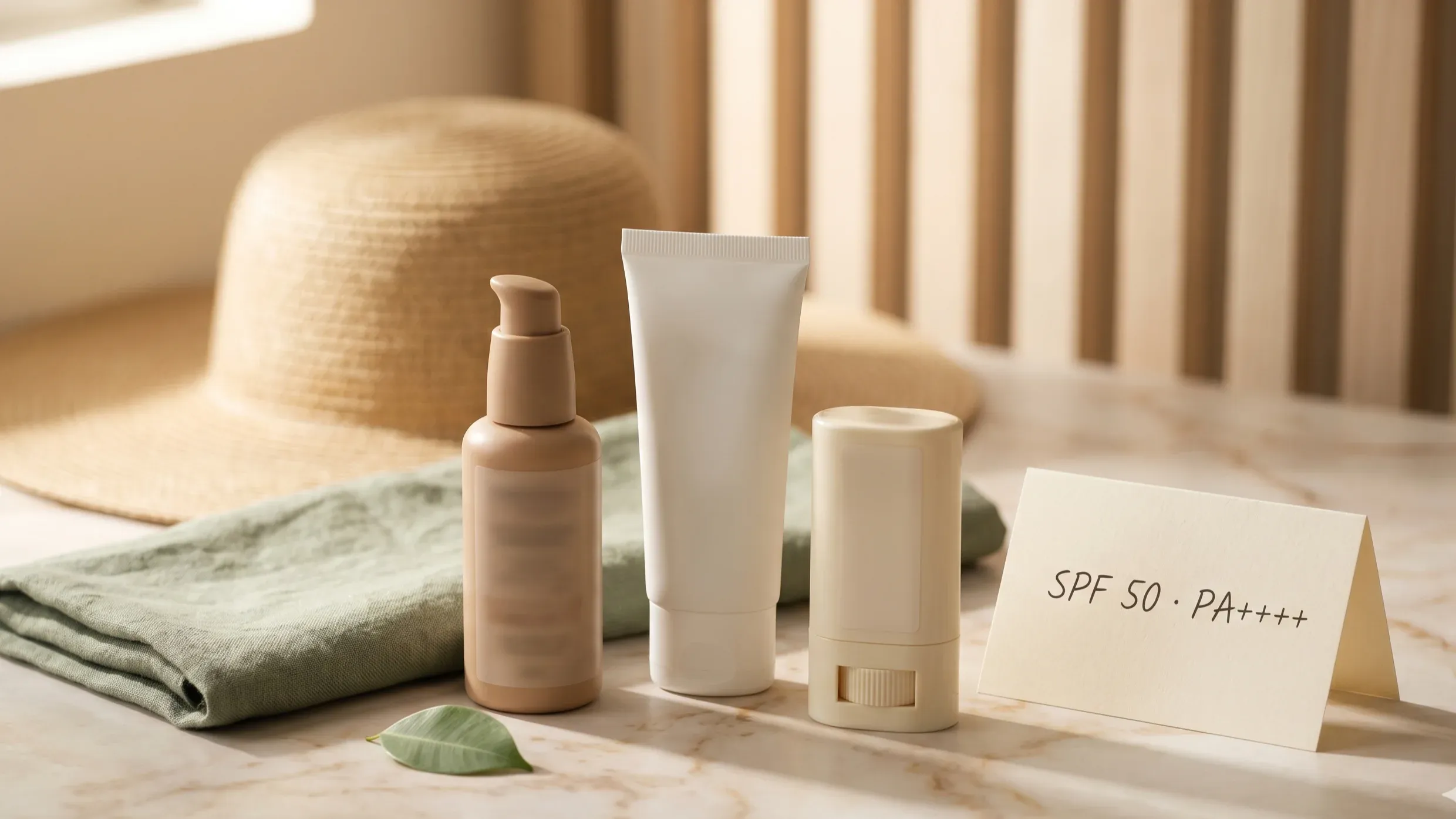
For routine outdoor use, the American Academy of Dermatology recommends broad-spectrum, water-resistant SPF 30 or higher. Apply according to the label to exposed skin, including easily missed areas such as ears and neck. Reapply about every two hours outdoors and after swimming or sweating as directed. Shade, clothing and a hat add protection that sunscreen alone cannot provide.
Mineral, organic-filter or hybrid?
These categories describe the filters, not a universal quality ranking. Mineral filters include zinc oxide and titanium dioxide. Both mineral and organic-filter sunscreens absorb ultraviolet radiation; mineral formulations also reflect some radiation. Texture, eye sting, fragrance and individual sensitivity may matter when choosing a usable product. There is no need to describe one whole category as harmful to justify choosing another. AAD filter guidance.
When a tint may help pigmentation
Visible light from sunlight can matter in melasma. A randomised trial compared an iron-oxide-containing sunscreen with UV-only protection while all participants used hydroquinone. The visible-light-protection group had better melasma outcomes. This supports discussing a suitable tint, but does not establish all tinted cosmetics as equivalent or sunscreen as a stand-alone cure.
Ask whether the formula and shade work for you and whether it can be applied evenly. A melasma plan may also include medical treatment and maintenance.
Do screens require special protection?
A systematic review of electronic-device blue light did not identify ordinary device exposure as a pigmentation or melasma hazard; exposure data and the number of studies were limited. That is different from claiming every exposure is harmless. It does mean screen brightness or night mode should not be presented as established pigmentation treatment.
For someone spending time beside a bright window or outdoors during the day, discuss actual sunlight exposure rather than counting screen hours.
Makeup, sticks and powders
The SPF on a product assumes the tested application amount. A light dusting of powder or a quick swipe should not be assumed to deliver that protection. Follow the product’s instructions and plan a way to reapply that gives even coverage. Water-resistant does not mean waterproof. See the FDA sunscreen guide for application and label limitations.
Children, pregnancy and vitamin D
For babies under six months, prioritise shade and protective clothing and ask a clinician about sunscreen where needed. For older children, use an age-appropriate product as directed. During pregnancy, discuss a comfortable formula and review prescription skincare separately; a blanket claim that all organic filters are unsafe is not justified here.
If vitamin D is a concern, discuss diet and whether assessment or supplementation is appropriate. Deliberate unprotected exposure is not a substitute for an individual plan. Follow expiry and storage instructions; do not assume every product expires exactly twelve months after opening. AAD practical guidance.
Bring the actual product or label photos to a skin consultation, particularly if sunscreen repeatedly stings or seems to trigger a rash.